



Introduction
When Contra Costa County voters head to the polls on June 2 for California’s statewide primary election, they’ll find more than just candidates on their ballot. Also up for a vote is Measure U, a measure to renew the county’s Urban Limit Line — a boundary that restricts urban development to just 35% of the county’s total land area until the year 2051.
The Urban Limit Line is one of the most consequential but least understood policies affecting Walnut Creek and the surrounding region. It shapes everything from housing supply and home prices to the preservation of the hillsides and open space that define the city’s character. Here’s what it means — and why it matters to every Walnut Creek resident.
What Is the Urban Limit Line?
The Contra Costa County Urban Limit Line was first established in 2004 and renewed in 2014. It designates specific areas within the county where urban development — including residential subdivisions, commercial centers, and industrial parks — is permitted. Everything outside the line is reserved for agricultural use, open space, and rural development, effectively preventing suburban sprawl from consuming the county’s remaining undeveloped land.
The current line, which expires in 2026, restricts development to approximately 35% of the county’s total land area. The renewal measure on the June ballot would extend that restriction to 2051, locking in the current urban-rural boundary for another 25 years. Supporters argue that the line has been essential for preserving Contra Costa County’s character; opponents contend that it exacerbates the housing crisis by artificially constraining the supply of developable land.
The measure requires a simple majority to pass. Previous renewals in 2004 and 2014 passed with overwhelming support — 62% and 65% of voters, respectively — suggesting broad public buy-in for the concept of managed growth.
How It Affects Walnut Creek
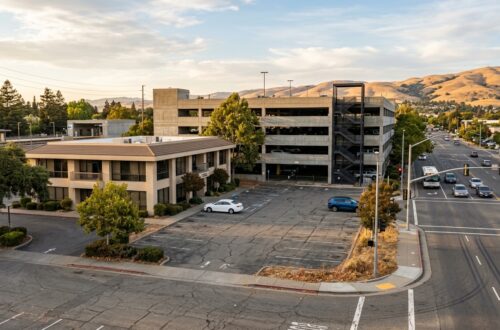
Walnut Creek is almost entirely inside the Urban Limit Line, meaning the measure doesn’t directly restrict development within the city’s existing boundaries. The city’s North Downtown Specific Plan, which envisions 2,800 new housing units by 2040, is not affected by the Urban Limit Line vote. Similarly, the ongoing BART station modernization and Broadway Plaza expansion are inside the line and will proceed regardless of the outcome.
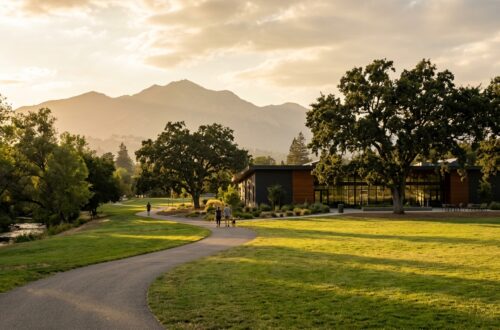
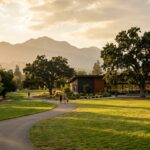
Where the Urban Limit Line matters for Walnut Creek is on its edges. The open spaces that ring the city — Shell Ridge, Lime Ridge, and the undeveloped hillsides that form the backdrop to neighborhoods like Northgate and Tice Valley — are outside the line. If the measure fails and development restrictions are lifted, those hillsides could theoretically be opened to residential development, fundamentally altering the character of the communities that abut them.
For Walnut Creek residents, the vote is therefore as much about protecting what they already have as it is about shaping future growth. The views of Mount Diablo from downtown, the network of trails that start at neighborhood trailheads, and the rural feel of the city’s perimeter are all protected by the Urban Limit Line.
The Housing Debate
The Urban Limit Line sits at the center of a broader debate about housing in the Bay Area. Contra Costa County’s population has grown from approximately 950,000 in 2000 to more than 1.1 million today, and projections call for continued growth. With only 35% of county land available for development, housing advocates argue that the Urban Limit Line artificially constrains supply, driving up home prices and rents throughout the region.
California’s statewide housing shortage is estimated at 3.5 million units, and the Bay Area is the epicenter of the crisis. In Walnut Creek, the median home price exceeds $1 million, and the median rent for a one-bedroom apartment hovers around $2,400. Critics of the Urban Limit Line argue that by preventing development on rural and agricultural land, the line forces all new housing into already-developed areas, where it’s more expensive to build and where local opposition is often most intense.
Supporters counter that the line is not the problem. They point out that even within the 35% of land available for development, there is substantial room for infill development, higher-density housing, and transit-oriented projects — particularly near BART stations and along major transit corridors. The issue, they argue, is not the amount of land but the political will to build on it.
What Happens Next
If Measure U passes, the Urban Limit Line will remain in place until 2051, giving the county a quarter-century of predictability about where development can and cannot occur. If it fails, the line expires, and the county’s General Plan — which provides land-use guidance but does not carry the same legal force as voter-approved measures — becomes the primary constraint on development.
Both sides are actively campaigning. Environmental and open-space advocacy groups, including the Muir Heritage Land Trust and Greenbelt Alliance, are urging a Yes vote. Homebuilder associations and some business groups are advocating against renewal, arguing that the county needs more flexibility to address its housing shortage.
For Walnut Creek voters, the decision comes down to a fundamental question: is the current development pattern working? If protecting open space and maintaining the city’s existing character is the priority, the Urban Limit Line is a proven tool. If increasing housing supply and restraining price growth is more urgent, letting the line expire may seem like a reasonable risk. Either way, the June 2 election will set Contra Costa County’s development trajectory for a generation.