


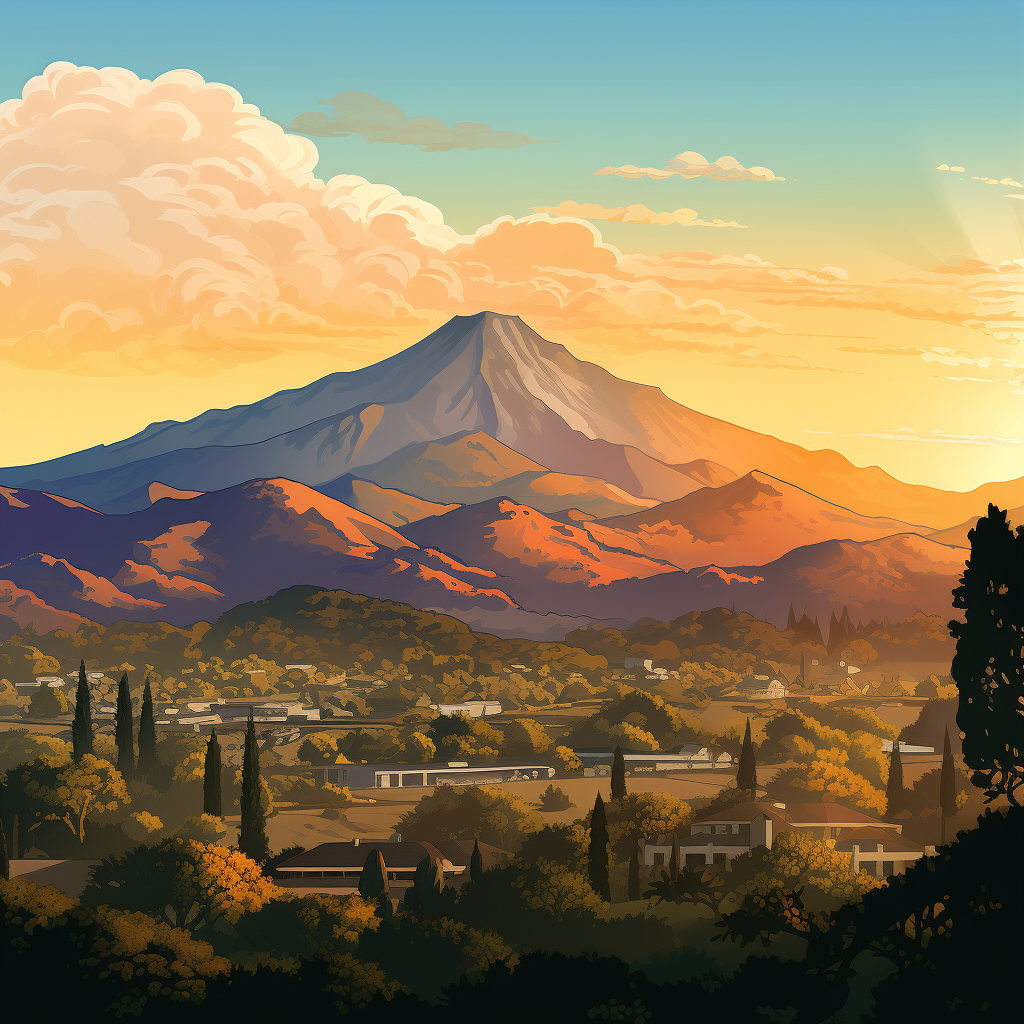
WALNUT CREEK, CA — Every town has an origin story, and Walnut Creek’s is better than most. It starts with a creek lined by native walnut trees, a Mexican land grant, and a stagecoach stop called The Corners. That last name came decades before anyone called this place a city.
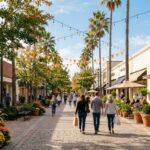
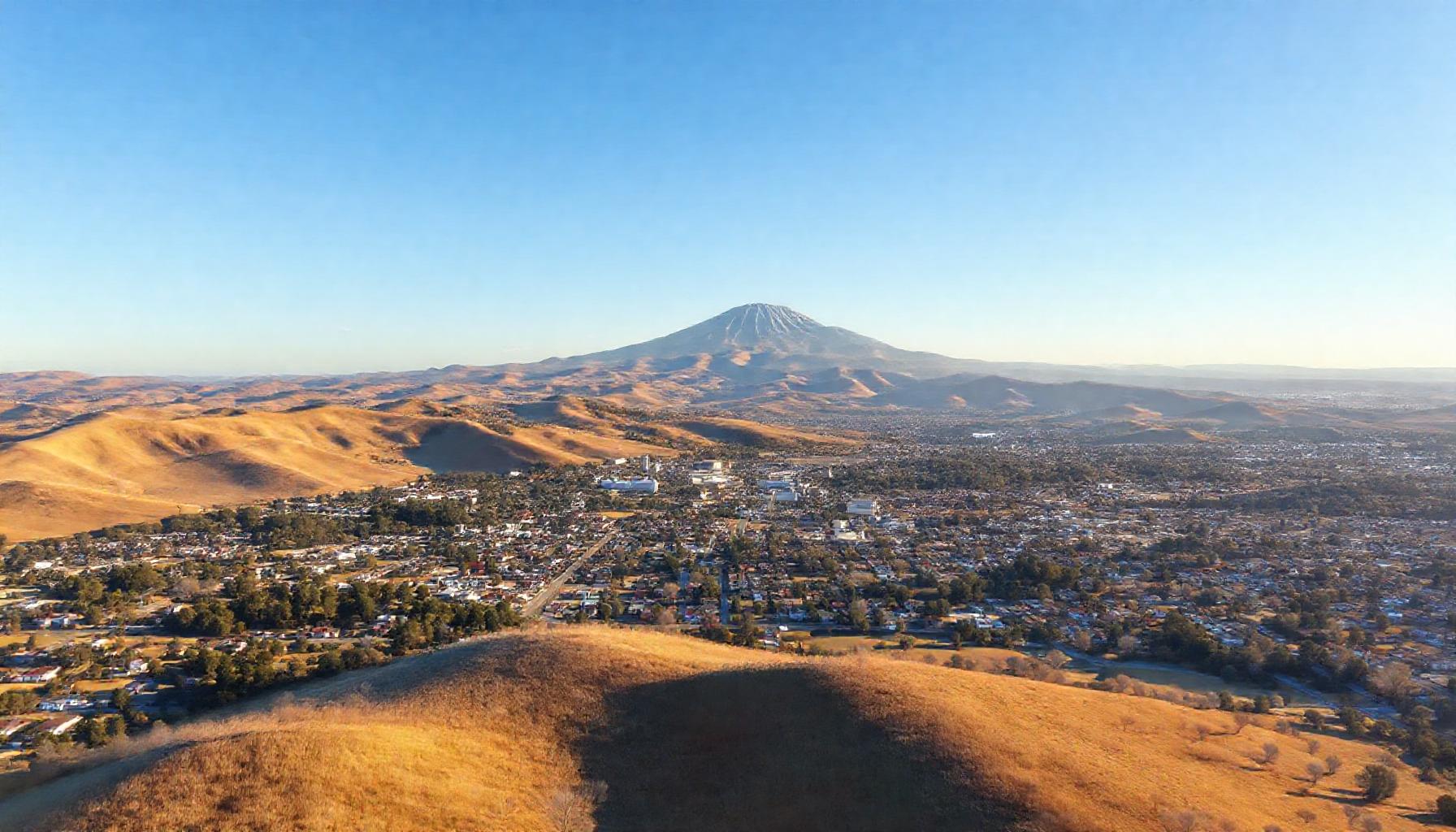
Today Walnut Creek is a suburb of some 70,000 people. The downtown hums on a Saturday, and open space climbs the ridges above town.
You can’t understand the city without the layers underneath it. So here’s the short version. A walk from the Bay Miwok homeland to the Walnut Creek you know now.
Before It Had a Name
Long before European settlement, the land that became Walnut Creek belonged to the Bay Miwok.
The Saclan lived in the hills and valleys to the south and east. On the slopes of Mount Diablo were the Volvon, also called Bolbon. The Tactan reached through the San Ramon Valley and into the Walnut Creek drainage.
They kept small, semi-permanent villages. And they moved with the seasons — acorns and seeds in the fall, fish and game when the creeks ran.
Then the Spanish missionaries arrived in the late 1700s.
Forced relocation to Mission San José and Mission Dolores, introduced disease, and the loss of traditional lifeways followed. By the early 19th century, the Bay Miwok population here had been cut to almost nothing. That part of the story isn’t charming, and it doesn’t get skipped.
The Land Grant That Named the Creek
Mexico won independence from Spain in 1821. The new government handed out large land grants in Alta California to pull settlers in.
In 1834, Rancho Arroyo de Las Nueces y Bolbones went to Juana Sanchez de Pacheco. It was one of the earliest grants in what’s now Contra Costa County. And it was one of the few held by a woman in her own name.
The grant covered roughly 18,000 acres, from the western slopes of Mount Diablo across the valleys to Suisun Bay.
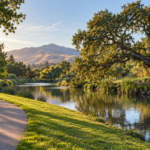
That name came from the native walnut trees (Juglans hindsii) growing thick along the creek banks. The Spanish and Mexican explorers wrote the landmark down in their journals.
After Pacheco died, the rancho was split up and sold. The land changed hands several times. That set the table for the Americans.
The Corners and Its Founders
The Gold Rush brought them in 1849. William Slusher staked the first permanent American homestead along the creek that same year.
The little settlement went by “The Corners.”
It sat where the Pacheco–San Ramon Valley road met the Oakland–Mount Diablo road. Today those are North Main Street and Ygnacio Valley Road.
In 1855, Milo Hough built the Walnut Creek House, a hotel and stagecoach stop that became the commercial heart of the place.
Slowly, “Walnut Creek” replaced “The Corners” as the name people used. Hiram Penniman, a surveyor and landowner, laid out the first grid. He staked the lots that became downtown.
Railroads and Cityhood
Railroads turned the hamlet into a town.
In 1891, the Southern Pacific pushed its line through the San Ramon Valley and put a station in Walnut Creek. That tied the community to Oakland, San Francisco, and the rest of the Bay Area. Local farmers — walnuts, pears, grapes, almonds — could finally ship to market fast.
The Sacramento Northern Railway later ran an electric interurban line right through downtown, carrying commuters north to Sacramento and south to Oakland.
With people and money moving, Walnut Creek incorporated as a city on October 21, 1914. It was the eighth city in Contra Costa County. The population then was a few hundred.
The foundation was already in place: rails, farm wealth, and a crossroads location.
From Farmland to Suburb
By the mid-20th century, the farmland was turning suburban. In 1951, the Broadway Shopping Center opened as the first big retail development in all of Contra Costa County.
Shoppers came from across the region. The Caldecott Tunnel’s third bore opened in 1964. Interstate 680 followed, and the commute to San Francisco stopped being an all-day affair.
The numbers tell the story: 2,460 residents in 1950, 9,903 by 1960, and more than 39,000 by 1970.
Downtown grew office towers, condos, and a restaurant scene that doesn’t quit. Today Walnut Creek anchors the I-680 corridor alongside Pleasant Hill and Concord.
The Open-Space Bet
Of everything Walnut Creek did in the 20th century, the open space bet may be the one that shaped it most.
In 1974, voters passed a bond measure to buy and permanently protect the ridges around town. It worked. More than 1,800 acres are now protected, including Shell Ridge, Lime Ridge, Acalanes Ridge, and Sugarloaf Open Space.
Walnut Creek has the highest open-space ratio per capita of any city in California.
The program keeps growing through partnerships with the East Bay Regional Park District and the Muir Heritage Land Trust. More than 32 miles of trails wind through oak-covered hillsides and grasslands.
Fifty years on, the open space is the thing locals brag about first — and for once, the brag holds up.
Walnut Creek History: Quick Answers
When was Walnut Creek founded?
American settlers arrived around 1849. Walnut Creek incorporated as a city on October 21, 1914 — the eighth incorporated city in Contra Costa County.
How did Walnut Creek get its name?
From Arroyo de las Nueces — Spanish for “Stream of the Walnuts” — a nod to the native California walnut trees that once lined the creek banks.
What was Walnut Creek called before?
“The Corners,” named for the crossroads of the Pacheco–San Ramon Valley road and the Oakland–Mount Diablo road. The name Walnut Creek gradually replaced it in the 1850s.
Who lived in Walnut Creek first?
The Bay Miwok people — including the Saclan, Volvon, and Tactan bands — lived here for thousands of years before Spanish missionaries arrived in the late 1700s.
What is Walnut Creek known for?
The highest open-space ratio per capita of any California city, a walkable downtown, and Broadway Plaza — the East Bay’s premier shopping district.
Last updated: October 2026. Keep exploring: the 175-year evolution of Walnut Creek, how downtown transformed, the Broadway Plaza guide, and things to do in town.