



When Walnut Creek residents open their June 2 primary ballots, one of the most consequential local measures won’t be about candidates — it’ll be about where Contra Costa County can and cannot build for the next 25 years.
Measure L, the Urban Limit Line renewal, asks voters to reaffirm a boundary that has shaped development in Contra Costa County since 1990. The line restricts urban development to roughly 35% of the county’s total land area, preserving the remaining 65% for agriculture, open space, and watershed protection. Without renewal, the current ULL is set to expire, potentially opening thousands of acres to development pressure.
What Is the Urban Limit Line?
The Urban Limit Line isn’t a new concept. Contra Costa County voters first approved it in 1990 and have renewed it multiple times since — most recently in 2006 with a 20-year extension. The line essentially draws a ring around existing cities and unincorporated urban areas, prohibiting large-scale development beyond it.
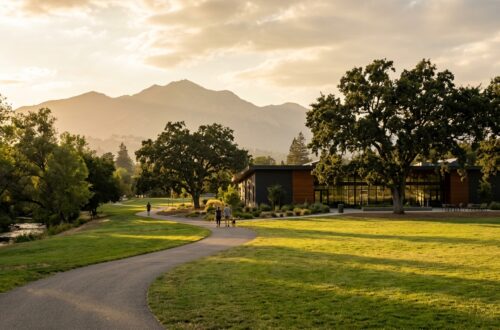
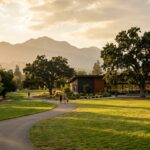
For Walnut Creek, the ULL has been a defining force. The open hillsides surrounding the city — including Shell Ridge Open Space, Lime Ridge, and the foothills of Mt. Diablo — are protected in part because the ULL prevents them from being rezoned for housing tracts or commercial development.
“Without the Urban Limit Line, the pressure to develop the open spaces around Walnut Creek would be immense,” said a spokesperson for Save Mount Diablo, the conservation group that has advocated for open space preservation in the region for decades. “This is about whether we want to be another sprawling suburb or keep the character that makes this area special.”
What Renewal Means for Walnut Creek
The renewal measure would extend the ULL through 2051, setting land-use policy for a generation. Here’s what’s at stake specifically for Walnut Creek:
Open Space Preservation: The ULL directly protects the open space network that Walnut Creek residents use daily — Shell Ridge, Lime Ridge Open Space, Acalanes Ridge, and the Iron Horse Trail corridor. These areas would face development pressure without the line in place.
Housing Development: Critics of the ULL argue that restricting developable land drives up housing costs by limiting supply. Supporters counter that Walnut Creek has significant capacity for infill development — particularly downtown and along the BART corridor — without needing to expand outward.
Property Values: The open space adjacent to Walnut Creek neighborhoods contributes materially to property values. Homes in areas like Northgate, Livorna Estates, and Rudgear that back up to protected open space command significant premiums specifically because that land cannot be developed.
Traffic and Infrastructure: Expanding development outward would require new roads, water lines, and emergency services — costs that typically fall on existing taxpayers. Infill development within the existing urban boundary uses infrastructure that’s already in place.
The Debate
The ULL renewal has drawn support from environmental groups, open space advocates, and many municipal leaders, including the Walnut Creek City Council, which voted to endorse the measure. Proponents argue it’s essential for preserving the region’s character, protecting watersheds, and preventing the kind of sprawl that has defined other Bay Area counties.
Opposition has come primarily from development interests and some affordable housing advocates who contend that the line artificially restricts housing supply at a time when California faces a severe shortage. The California Association of Realtors and several building industry groups have argued against renewal.
“We can’t solve the housing crisis by paving over the hillsides,” countered one Walnut Creek planning commissioner who spoke in favor of the measure. “We solve it by building smart, dense housing near transit — exactly what the BART Transit Village and downtown development represent.”
How to Vote
The California primary election takes place Tuesday, June 2, 2026. Key dates:
- Registration deadline: Monday, May 18, 2026 (passed — same-day conditional registration still available at polling places)
- Vote-by-mail: All registered California voters receive a mail ballot. Ballots must be postmarked by June 2 or dropped at a ballot drop box by 8:00 p.m. on election day.
- In-person voting: Polling places open 7:00 a.m. to 8:00 p.m. on June 2. Find your polling place at cocovote.us.
- Ballot drop boxes: Walnut Creek has multiple 24-hour drop boxes, including at City Hall (1666 N. Main St.) and the Walnut Creek Library (1644 N. Broadway).
Measure L requires a simple majority to pass. The Contra Costa Elections Division will begin releasing results after polls close at 8:00 p.m. on June 2.
Sources: Contra Costa County Elections Division, Save Mount Diablo, City of Walnut Creek, Claycord.com reporting.