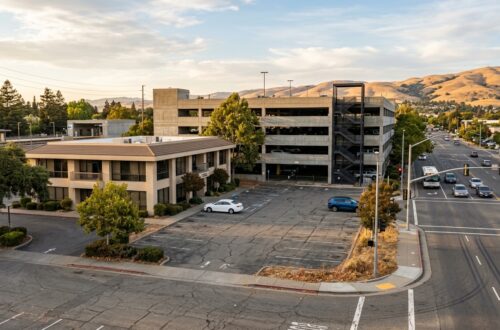








MARTINEZ, CA — When FBI agents fan out across a county government office with search warrants in hand, they are not there for a conversation. They are there for the hard drives, the emails, the spreadsheets, and the paper files that could become exhibits in a federal courtroom.
On Tuesday, June 9, FBI agents executed three federal search warrants in Contra Costa County — at the County Assessor’s office, at outgoing Assessor Gus Kramer’s Martinez home, and at the Pacheco residence of Assistant County Assessor Vince Robb. The warrants, signed June 4 by U.S. Magistrate Judge Robert Illman, authorized agents to search for evidence of wire fraud and “other offenses,” according to documents reviewed by the Bay Area News Group.
The investigation is ongoing, and FBI spokesperson Cameron Polan said the agency cannot provide further details. But three search warrants tell their own story: federal investigators have probable cause, and they are now building a case — one device, one document, one data point at a time. For Walnut Creek residents, whose property tax assessments are handled by this office, understanding what the FBI is looking for — and what they might find — is a window into how accountability works when public institutions face federal scrutiny.
The Electronic Evidence: What Devices Can Reveal
Federal search warrants in public corruption cases almost always target electronic devices: desktop computers, laptops, tablets, smartphones, external hard drives, and USB storage devices. In the Assessor’s Office raid, the warrant authorized agents to seize any device used to conduct county business — or communicate about it.
A single office workstation can contain years of property assessment data, internal correspondence, and metadata logs showing who accessed which records. A smartphone or laptop might hold encrypted messaging histories, email drafts, or cloud-synced files that never touched a county server. The FBI’s forensic capabilities are extensive. Deleted files remain recoverable until overwritten. Encrypted messaging services leave artifacts on devices even when messages auto-delete. Spreadsheet metadata can reveal original authors, modification timestamps, and revision histories that contradict official timelines.
In a case involving potential manipulation of property valuations, these digital forensics are particularly relevant. A property assessment that appears to have been improperly adjusted downward could be traced through access logs, modification timestamps, and the chain of internal approvals — or the absence of them.
The average Walnut Creek home is valued around $1.1 million. A single percentage-point shift in assessed value means thousands of dollars in tax liability — up or down. The integrity of those numbers is not abstract. It shows up on every property tax bill in the city.
The Paper Trail: Physical Evidence and Financial Records
While digital forensics command headlines, physical evidence can be equally decisive. FBI agents were authorized to collect documents, ledgers, financial records, and storage media — CDs, DVDs, external drives — relevant to the suspected wire fraud offenses.
Paper records fill gaps that digital evidence cannot. Handwritten notes, printed spreadsheets with margin annotations, internal memos that were never digitized, and financial disclosure forms with inconsistencies can all serve as direct evidence of intent — the element that often determines whether a case results in charges.
Agents likely also collected evidence tied to the retaliation and whistleblower complaints that have followed the Assessor’s Office for years. In January 2026, county officials considered settling a lawsuit accusing Kramer of improperly slashing a property’s assessed value by millions of dollars and retaliating against the whistleblower who raised concerns. Documents from that case now carry new weight under federal scrutiny.
The search of two private residences — Kramer’s Martinez home and Robb’s Pacheco home — adds another dimension. Home searches require additional judicial findings beyond those needed for an office search. The warrants for those locations mean a federal judge was convinced evidence existed at private homes, not just at a county building. That detail, by itself, raises a pointed question: Was public business being conducted through private channels?

What Happens Next: Grand Jury, Evidence Review, and the Election Timeline
Three days after the June 9 raids, the fundamental question remains: Will the FBI’s evidence-gathering lead to criminal charges? The path from search warrant to indictment is rarely straight and never fast.
Federal agents will now spend weeks — potentially months — on forensic analysis of seized devices, document review, and witness interviews. If the evidence supports charges, prosecutors will present their findings to a federal grand jury. Grand juries operate in secret. They can subpoena additional records and compel testimony under oath.
The timeline is complicated by the election calendar. Kramer announced in March that he would retire rather than seek a ninth term. Assistant County Assessor Vince Robb — endorsed by Kramer — won the June 2 primary election with 67.7% of the vote and is set to take office in January 2027. That means the individual whose home was searched by the FBI is the presumptive next Assessor, while the outgoing Assessor is the subject of a federal investigation.
Presumption of Innocence
No charges have been filed against Gus Kramer, Vince Robb, or any employee of the Contra Costa County Assessor’s Office. The execution of a search warrant establishes that a federal judge found probable cause to believe evidence of a crime exists at the locations searched. It does not constitute a finding of guilt, and all individuals are presumed innocent unless and until proven guilty in a court of law. Kramer, through his attorney Michael Rains, has repeatedly denied legal wrongdoing.
The Political Clock: Timing Questions That Persist
The timing has raised eyebrows. The warrants were signed June 4 — two days after the primary election in which Robb won the Assessor seat — but were not executed until June 9. No public explanation has been given for the five-day gap.
Context matters here. Kramer’s 32-year tenure has been punctuated by investigations and controversies:
- A 2009 civil grand jury sought his removal over workplace harassment — Kramer sued and prevailed at trial
- That same year, his office allegedly overvalued vacant lots belonging to a developer with whom Kramer had publicly feuded
- In 2010, reporting revealed he failed to disclose loans, business interests, and property holdings — later filing 33 amendments to disclosure forms
- In 2011, the Contra Costa District Attorney investigated land deals but declined to prosecute; two deputy DAs later alleged political interference
- In 2019, the California Fair Political Practices Commission fined Kramer $5,500 for improperly reporting campaign contributions
- In 2019, a civil grand jury accused Kramer of “willful or corrupt misconduct” for creating a hostile work environment — the case resulted in a mistrial
When a public official with this history becomes the subject of an FBI raid, the question is not “why now?” so much as “what changed?” The answer may lie in the evidence itself — something agents believe they can prove that previous investigators could not.
| Date | Event |
|---|---|
| 1994 | Gus Kramer elected Contra Costa County Assessor; takes office |
| 2009 | Civil grand jury seeks removal over workplace harassment; Kramer sues and prevails at trial |
| 2010 | Investigative reporting reveals undisclosed loans, business interests, and property holdings; 33 amendments to disclosure forms filed |
| 2011 | DA investigation into land deals; no prosecution — two deputy DAs later allege political interference |
| 2019 | FPPC fines Kramer $5,500; civil grand jury accusation of willful misconduct results in mistrial |
| Jan 2026 | County considers settling whistleblower lawsuit over alleged property value manipulation and retaliation |
| Mar 2026 | Kramer announces retirement; endorses Vince Robb as successor |
| Jun 2, 2026 | Robb wins primary election with 67.7% of vote |
| Jun 4, 2026 | Magistrate Judge Illman signs federal search warrants for wire fraud evidence |
| Jun 9, 2026 | FBI executes warrants at three locations: Assessor’s office, Kramer home, Robb home |
| Jan 2027 | Robb scheduled to assume office as Contra Costa County Assessor |
The Bottom Line for Walnut Creek
The FBI investigation is a story about evidence. What investigators find on seized hard drives and in seized documents will determine whether this becomes a footnote in a controversial career or a federal criminal case.
For Walnut Creek residents, the stakes are direct. The Assessor’s Office determines the taxable value of every property in the county. Property taxes fund roughly 34% of Walnut Creek’s general fund. When the integrity of that office faces federal investigation, it is not abstract.
The investigation will take time. Forensic analysis is methodical. Grand jury proceedings are sealed. The public will hear little until agents have exhausted the evidence trail — or until charges are filed.
One fact is already clear: a federal magistrate judge concluded there was probable cause to search an elected county official’s office and two private homes. That threshold is not trivial. It means the evidence trail has already led somewhere significant.
This article will be updated as new information becomes available. For official updates, refer to the FBI San Francisco Field Office and the Contra Costa County website.