





The Award and the Irony
WALNUT CREEK, CA — On Wednesday, BART received the Triple Crown Award from the Government Finance Officers Association, one of the highest honors in public finance. The award recognizes governments that achieve excellence in budgeting, financial reporting, and financial planning — an achievement earned by only 441 governments across the United States and Canada. It is, by any measure, a validation of BART’s financial stewardship.
Two days later, the agency’s leadership was warning that if a regional transit funding measure fails on the November ballot, the system will begin dismantling itself in January 2027 — cutting service to three lines with 30-minute frequencies, closing up to 15 stations, raising fares by 50%, and laying off 1,200 employees. The contingency plan, spelled out in a document the BART Board initially approved in February, includes a final option that reads simply: “stop passenger service.”
The juxtaposition is jarring but not contradictory. BART can be both well-managed and financially imperiled. The agency has cut more than $516 million in operating costs since 2019, reduced headcount, adopted efficiency measures recommended by an independent review, and earned recognition from the Federal Transit Administration for full compliance with 23 federal standards. What it cannot do is fix a revenue model that was built for a different era of commuting.
The Math That Broke BART
BART’s financial model has historically depended on fare revenue to cover the bulk of its operating costs. Before the pandemic, weekday ridership routinely exceeded 400,000 trips, and fares covered roughly 70% of operating expenses — an unusually high ratio for American public transit. That model worked when the Bay Area’s office workers commuted five days a week. It does not work when they commute two or three.
Weekday ridership is still roughly half of pre-pandemic levels, and while the system has posted encouraging growth — average weekday trips are projected to exceed 200,000 for the first time since 2020 — the revenue gap is structural. Federal pandemic relief funds that kept the system solvent over the past several years are now running out. BART faces a $375 million structural deficit for the fiscal year that begins July 1, 2026. Even with aggressive cost cuts, borrowing, and optimistic assumptions about a November ballot measure, the agency could only close about $303 million of that gap. The remaining $88.5 million will be borrowed.
If the November transit funding measure fails and the Alternative Service Plan goes into effect, Walnut Creek commuters would face dramatic reductions:
January 2027: Service reduced to three lines (Yellow, Blue, Orange only). 30-minute frequencies on all lines. System closes at 9 p.m. daily. Fares increase 30%. Weekend and evening service becomes extremely limited — no Red Line or Green Line service at all outside peak commute direction. Train hours cut 63%.
July 2027: Up to 15 stations potentially closed. Fares increase by a cumulative 50%, with the estimated average fare rising to $7.26. 1,200 employees laid off. Service hours cut 70% from current levels.
Contingency: If BART cannot safely or legally operate with available resources, the system stops passenger service entirely.
What This Means for Walnut Creek Commuters
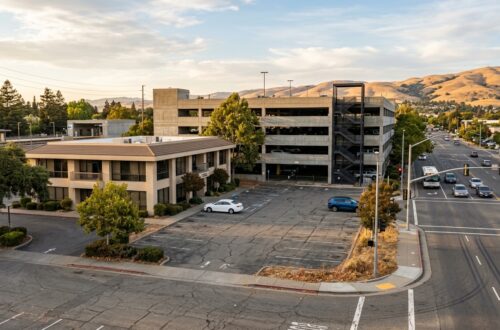
Walnut Creek Station is one of the busiest in the BART system outside of San Francisco and Oakland. On a typical weekday before the pandemic, the station’s parking garage filled by 7:30 a.m., and the platform was dense with commuters heading into San Francisco’s Financial District. Even at reduced ridership levels, it remains a critical node in the Yellow Line corridor that connects Contra Costa County to the urban core of the Bay Area.
Under the Alternative Service Plan, the Yellow Line would survive, but at 30-minute frequencies and with no evening service after 9 p.m. The implications for Walnut Creek residents are not abstract. A commuter whose workday ends at 6 p.m. in San Francisco and who attends a dinner or event afterward would find no BART train available for the return trip. Weekend trips — currently a bright spot in BART’s ridership recovery, with strong Saturday and Sunday demand driven by events, dining, and leisure travel — would become dramatically less practical.
The station itself is not named in the list of potential closures — the Alternative Service Plan does not specify which stations would be shuttered, leaving that decision to the Board — but the functional impact of 30-minute headways and early closures would make the station meaningfully less useful regardless of whether it stays open.
How BART Built Walnut Creek
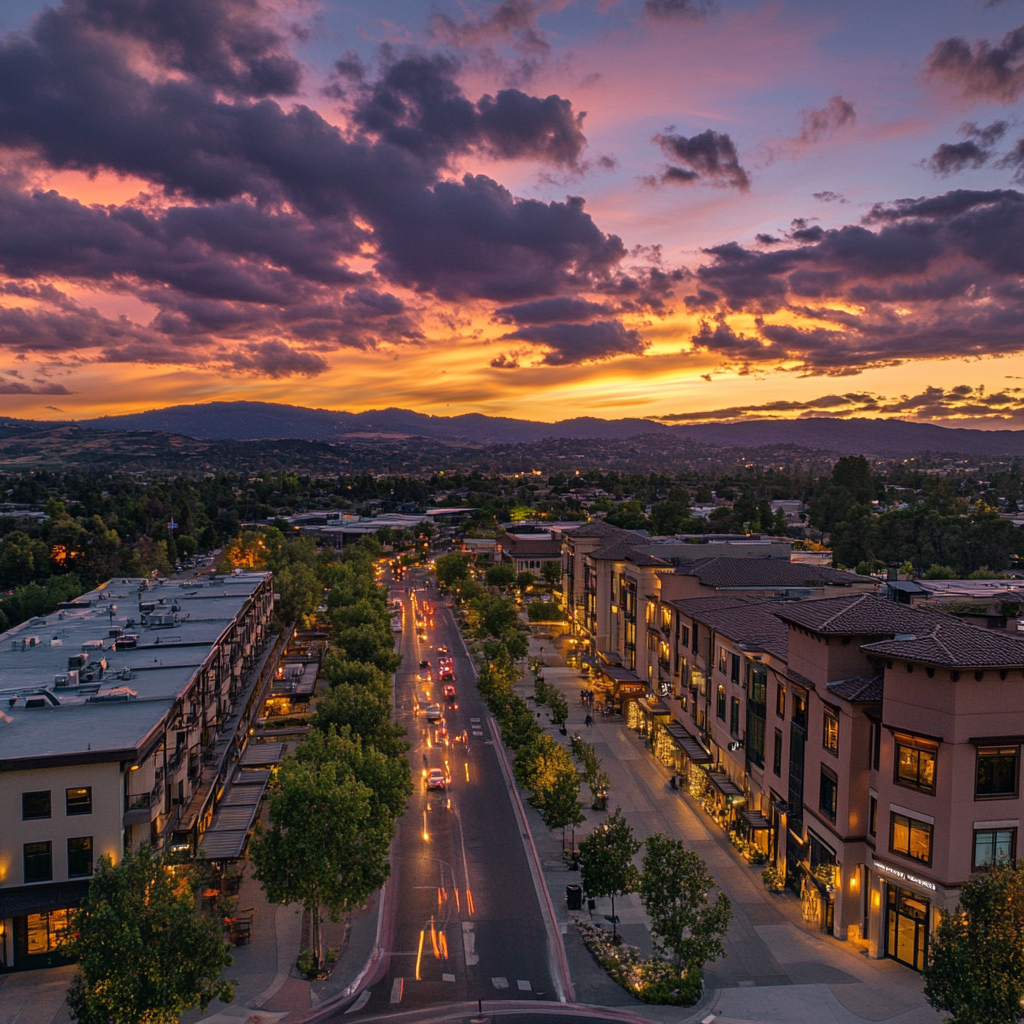
It is difficult to overstate what BART meant for Walnut Creek’s transformation from a small agricultural town into the commercial hub of Contra Costa County. When BART service reached Walnut Creek in May 1973, the city’s population was approximately 40,000. Over the following five decades, the population roughly doubled, and downtown Walnut Creek became one of the most desirable suburban office and retail destinations in the Bay Area.
The Walnut Creek BART station did not just make it easier for residents to commute to San Francisco. It made Walnut Creek a destination. Office tenants who might not have considered an East Bay location without rapid transit access signed leases downtown. Retail development clustered around the station area, creating the walkable core that now defines the city’s identity. The Broadway Plaza expansion, the Lesher Center for the Arts, the cluster of restaurants on North Main Street — all benefit from the transit accessibility that BART provides.
A BART system operating at 30-minute frequencies with 9 p.m. closures would not sever Walnut Creek from the region, but it would fundamentally alter the calculus for anyone who depends on the system — commuters who cannot afford to lose two hours of their day to driving, downtown businesses whose customer base includes BART riders, seniors in Rossmoor who use the system to access medical appointments in San Francisco and Oakland, and the thousands of residents who moved to Walnut Creek specifically because BART made it possible to live in the East Bay and work in the city.
What Comes Next
The Alternative Service Plan is not inevitable. It is contingent on the failure of a regional transit funding measure expected on the November 2026 ballot. If that measure passes, BART’s FY27 budget assumes $74 million in new revenue, and the service cuts, station closures, and fare increases would not take effect. The FY27 budget adopted by the BART Board on June 11 includes no fare increases and maintains all discounts for seniors, youth, low-income riders, and people with disabilities — but it also relies on $88.5 million in borrowing and assumes the ballot measure succeeds.
The BART Board has already approved early action strategies to reduce costs and increase revenue, including fare gate optimization, parking revenue enhancements, shorter trains during low-demand periods, contract savings, and expanded retail partnerships. These measures matter, but they are trimming around the edges of a structural deficit that cannot be closed without either a new funding source or profound service reductions.
| Scenario | Key Impacts for Walnut Creek | Timeline |
|---|---|---|
| Funding Measure Passes | Current service levels maintained; August 2026 schedule improvements with better train spacing — Yellow and Red Line trains spaced 10 minutes apart instead of 5 and 15; Antioch-to-Richmond transfers save 17 minutes | FY27 (July 2026–June 2027) |
| Funding Measure Fails — Phase 1 | 3-line service only; 30-minute frequencies; 9 p.m. closures; 30% fare increase ($4.98 avg → $6.38); 63% reduction in train hours; 1,200 layoffs | January 2027 |
| Funding Measure Fails — Phase 2 | Up to 15 stations closed; 70% reduction in service hours; cumulative 50% fare increase ($7.26 avg); potential to stop all passenger service | July 2027 |
For Walnut Creek, the stakes are clear. The November ballot measure will determine whether the transit infrastructure that shaped the city’s last half-century of growth remains a functional asset or becomes a diminished one. The choice, ultimately, rests with voters across the Bay Area who will decide whether a system that has earned national recognition for financial management deserves the revenue it needs to survive.
Sources: BART — Triple Crown Award Announcement; BART — FY27 Budget Adoption; BART — Alternative Service Plan; BART Financial Crisis Overview; Metropolitan Transportation Commission.