






WALNUT CREEK, CA — Walnut Creek has long been known for its vibrant downtown and convenient transit connections, but one aspect of the city’s identity consistently surprises visitors: it owns more open space per capita than any other community in California. This remarkable achievement is the result of decades of deliberate conservation, and 2026 brings exciting new chapters in the story of Walnut Creek’s preserved landscapes.
A Legacy Born of Vision: The 1974 Bond Measure
The foundation of Walnut Creek’s open space network was laid in 1974, when voters approved a landmark $6.7 million bond measure to acquire and permanently protect undeveloped hillsides, ridgelines, and park sites. At the time, the city had fewer than 30,000 residents, yet the commitment to conservation was resolute. The measure funded the purchase of 1,800 acres of open space — land that might otherwise have been developed into hillside homes — and established a model for suburban conservation that other communities across California would later seek to emulate.
“In 1974, Walnut Creek voters did something extraordinary — they taxed themselves to ensure their hillsides would never become housing tracts. Fifty years later, that decision defines this city.”
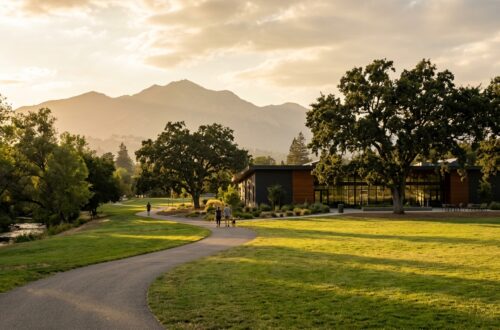
The open space program continues to expand through partnerships with the Muir Heritage Land Trust and the East Bay Regional Park District. Over 32 miles of trails wind through oak-studded hillsides, grasslands, and riparian corridors, accessible directly from neighborhoods throughout the city.
2026 Trail Connections: Linking the Landscape
This year’s most significant development is a series of trail connection projects that will link Walnut Creek’s major open spaces into a unified regional network. The centerpiece is the completion of a trail connection between Lime Ridge Open Space and Shell Ridge Open Space, creating a continuous 8-mile corridor from the Ygnacio Valley floor to the slopes of Mount Diablo.
Walnut Creek Open Spaces
| Shell Ridge | Rolling grasslands with panoramic views of Mount Diablo |
| Lime Ridge | Oak woodlands and chaparral, popular with hikers and birdwatchers |
| Acalanes Ridge | Scenic ridgeline connecting to Lafayette/Moraga trail system |
| Sugarloaf | Wooded preserve with seasonal creek, picnic areas |
The Iron Horse Regional Trail, which runs through Walnut Creek along the former Southern Pacific rail corridor, serves as the spine of the city’s active transportation network. Recent improvements include wayfinding signs, trailhead parking expansions, and a new under-crossing at Treat Boulevard that eliminates a previously dangerous at-grade crossing.
Beyond the core open spaces, the Diablo Foothills Regional Park and Castle Rock Regional Recreation Area, both operated by the East Bay Regional Park District and located within Walnut Creek’s sphere of influence, offer additional hiking, rock climbing, and equestrian opportunities that draw visitors from across the Bay Area.
Environmental and Quality of Life Benefits
The preservation of Walnut Creek’s open spaces delivers measurable benefits beyond recreation. The oak woodlands and grasslands that ring the city act as a natural heat sink, moderating summer temperatures in nearby neighborhoods. They provide critical habitat for wildlife including golden eagles, bobcats, and the Alameda whipsnake. And they capture and filter rainwater, reducing runoff into the Walnut Creek channel and improving water quality in Suisun Bay.
For residents, the health and wellness benefits are substantial. Studies consistently show that access to green space correlates with lower rates of cardiovascular disease, reduced stress, and higher rates of physical activity. In Walnut Creek, where 32 miles of trails begin at neighborhood trailheads, that access is a daily reality rather than a weekend excursion.
Conclusion
Walnut Creek’s open space network is more than a collection of parks — it’s the physical manifestation of a community’s values. From the visionary 1974 bond measure to the 2026 trail connections being built today, the commitment to preserving wild California landscapes alongside urban sophistication has become the city’s defining characteristic. As other communities struggle to retrofit conservation into their suburban fabric, Walnut Creek stands as proof that it’s possible to grow while protecting the places that make a city worth living in.


One comment on “Walnut Creek Expands Open Space Network with New Trail Connections”