





A Network That Never Blinks
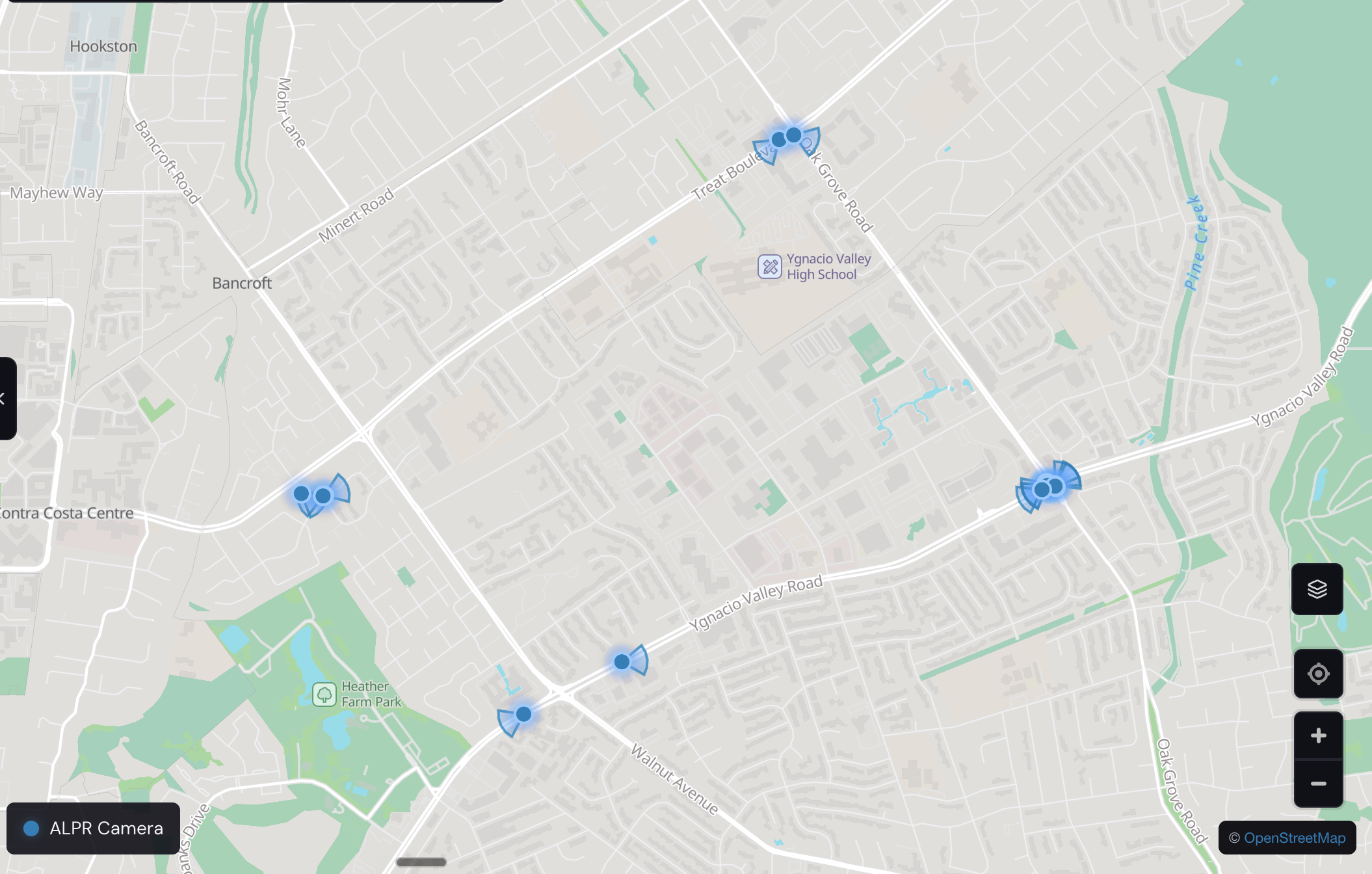
Roughly 40 Flock Safety automated license plate readers now watch the roads of Walnut Creek — part of a network of about 300 such cameras across Contra Costa County. They photograph every vehicle that passes, day and night, logging license plates, vehicle descriptions, timestamps, and GPS coordinates into a searchable database that law enforcement can query. The cameras have been in place long enough now that the question isn’t just “how do they work?” — it’s “are they working?”
The answer, as with most surveillance technology, depends heavily on which question you’re asking. If you’re measuring by cases solved and stolen cars recovered, the Flock network appears to deliver. If you’re measuring by transparency, accountability, and community trust, the ledger is harder to read.
What the Cameras Are Good At: Solving Crimes After They Happen
Flock cameras excel at investigative follow-up. If a crime occurs and a vehicle description exists — even a partial one — investigators can search the Flock network for matches. A white Ford F-150 with a roof rack and a dent on the passenger door, seen near the scene of a burglary? The system can find every instance of a vehicle matching that description passing any of the 300 cameras in the county, with timestamps and mapped routes.
This capability has proven valuable across Contra Costa County. Law enforcement agencies have used Flock data to track suspects in hit-and-run collisions, locate stolen vehicles within hours, identify getaway cars in retail theft rings, and establish timelines in missing persons investigations. The Walnut Creek Police Department views the cameras as a force multiplier — a way to extend investigative reach without adding headcount, something that matters in a department navigating ongoing staffing pressures.
Flock Safety, the Atlanta-based company behind the cameras, publishes a steady stream of case studies: stolen cars recovered in under an hour, kidnapping suspects identified from partial plate reads, organized retail theft rings dismantled through cross-jurisdictional camera hits.
The cameras don’t prevent crime, at least not directly. A Flock camera on a pole doesn’t stop a car from speeding past it. But the deterrent effect — the knowledge that every vehicle on Ygnacio Valley Road or Treat Boulevard is being photographed and logged — may shift behavior at the margins, particularly for crimes that involve vehicles.
Each Flock camera captures the license plate number, date, time, GPS location, vehicle make, model, color, and distinguishing features such as dents, roof racks, and bumper stickers. All of this becomes searchable data. Investigators can search for “a white Ford F-150 with a roof rack and a dent on the passenger door” and get results from the entire network. For a deeper dive: FLOCK Cameras in Walnut Creek: How They Work and What They Mean for Your Privacy.
What the Cameras Are Less Good At: Transparency and Accountability
Flock cameras generate an enormous volume of information about the movements of ordinary people going about ordinary days — picking up kids from school, driving to the grocery store, visiting a doctor’s office. Every trip past a camera becomes a data point in a searchable system. Contra Costa County’s Flock network holds data for 30 days by default before automatic deletion, and agencies that use the system must have a written policy governing access.
But those policies vary by agency, and independent oversight is limited. Privacy advocates have raised several concerns:
Scope creep. Cameras installed for vehicle theft can be used for entirely different investigations depending on policy language. “Mission creep is the default setting for surveillance technology,” one ACLU representative told the East Bay Times. “What starts as a tool for auto theft becomes a tool for immigration enforcement, for monitoring protests, for tracking people who have done nothing wrong.”
Cross-jurisdictional data sharing. Flock’s network architecture allows agencies to share camera data across city and county lines. An officer in one jurisdiction can run a search against cameras in another, potentially without the knowledge of the agency that owns those cameras.
Lack of independent auditing. While Flock maintains access logs, there is no independent mechanism for the public to verify that searches are being conducted appropriately or that stated data retention policies are being followed.
Chilling effects. The knowledge of persistent surveillance may discourage people from engaging in lawful activities — attending protests, visiting reproductive health clinics, or seeking addiction treatment — if they fear their movements are being tracked. Even without facial recognition, pattern-of-life analysis from license plate data can reveal sensitive information about individuals.
Where Walnut Creek Fits in the Broader Picture
Walnut Creek is not an outlier. Flock cameras have been adopted by thousands of agencies across the United States. The technology has become standard in the modern policing toolkit — and, for the most part, public opposition has been muted compared to red-light cameras or facial recognition systems.
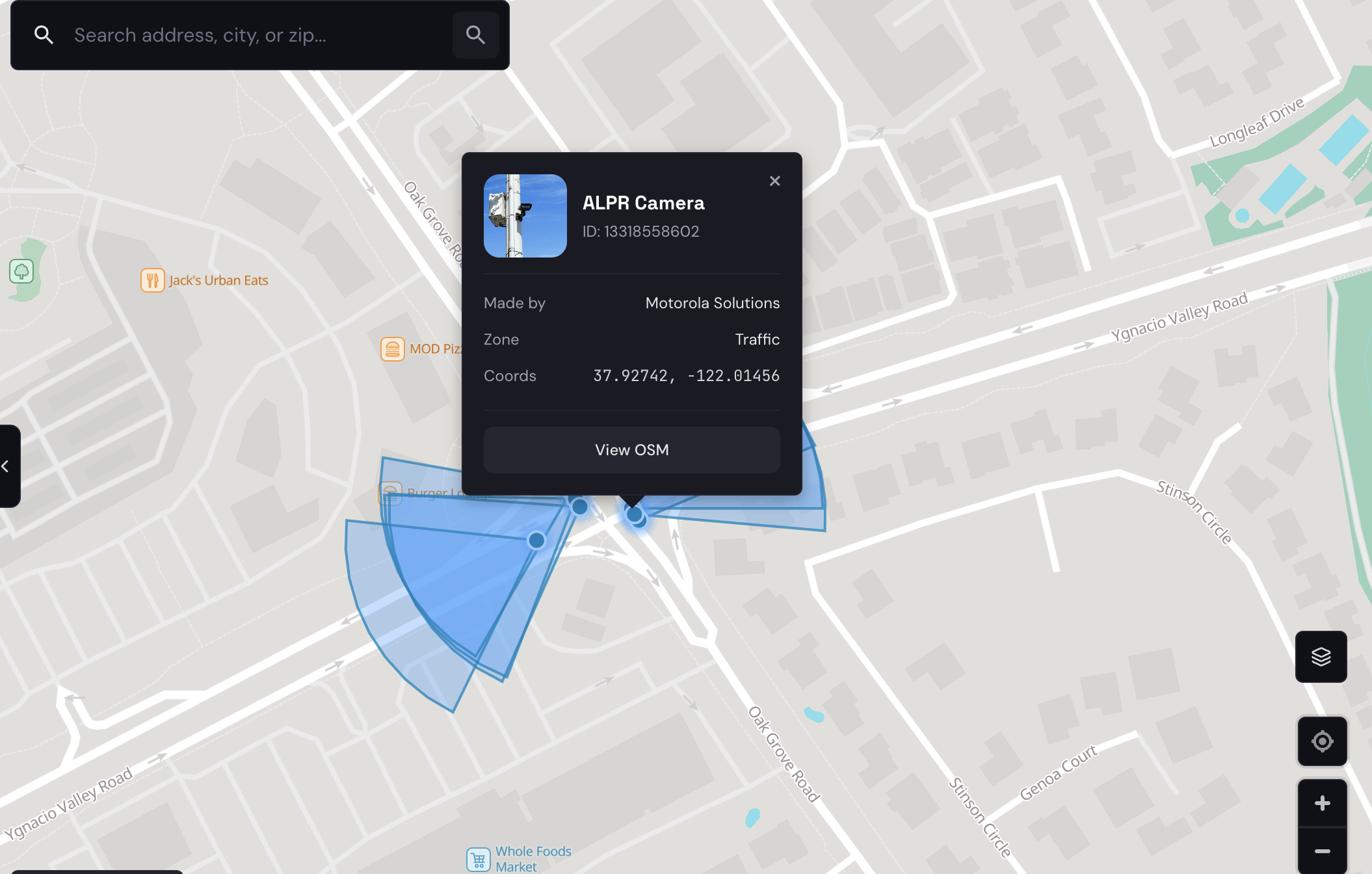
Part of the acceptance comes from the technology’s design: no facial recognition, no video recording, rear-of-vehicle photography only. But a system that logs the location of 40 cameras across a city of 70,000 people, networked with 260 more across the county, creates a strikingly detailed picture of movement patterns — who goes where, and when, and how often.
For residents who want to understand where the cameras are, the DeFlock interactive map is the best starting point. For those with concerns about the cameras’ use, Walnut Creek city council meetings and the Walnut Creek Police Department’s public records process are the available channels for raising them.
The Bottom Line for Walnut Creek Residents
The Flock cameras are almost certainly here to stay. The technology is embedded in law enforcement workflows, the cost is manageable for agencies, and the investigative utility has been demonstrated repeatedly. The friction points — the issues that will determine whether the system earns public trust or erodes it — are about guardrails: how the data is accessed, who oversees that access, and whether the policies that govern the system keep pace with its expanding footprint. The cameras watch the roads. The question that matters a year into their deployment is whether anyone is watching the cameras.
| Topic | Current Status |
|---|---|
| Cameras in Walnut Creek | Approximately 40 |
| Contra Costa Total | Approximately 300 |
| Data Captured | Plate, make/model/color, timestamp, GPS, vehicle features |
| Data Retention | 30 days, then auto-deleted |
| Access Policy | Written policy per agency; varies |
| Oversight | Limited; no public audit mechanism |
| Camera Map | maps.deflock.org |
| WCPD Non-Emergency | (925) 935-6400 |
| Records Bureau | (925) 943-5865 |
Sources: Walnut Creek Police Department; FLOCK Safety; DeFlock (maps.deflock.org); East Bay Times; ACLU Northern California. See our earlier explainer: FLOCK Cameras in Walnut Creek: How They Work and What They Mean for Your Privacy.