






Walnut Creek Keeps Adding Housing — But Who Is It Actually For?
New units are going up all over town. The question nobody wants to answer: affordable for whom?
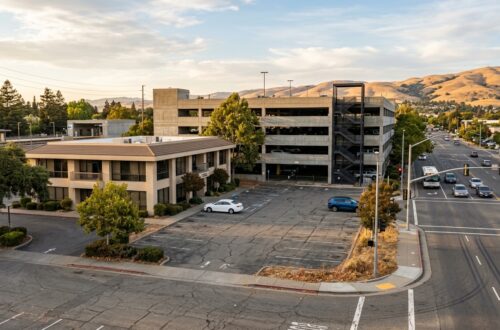
On paper, Walnut Creek is doing exactly what California keeps telling cities to do: build more housing. The downtown skyline is sprouting cranes. The BART station area has plans for hundreds of new apartments. The Locust Street corridor is getting a full rezoning treatment.
But walk through any of these developments and ask the obvious question — who actually lives here? — and you start hearing a different story than the press releases.
Let’s untangle the gap between what’s being built and who it’s serving.
What the Numbers Actually Say
Under the state’s 6th-cycle Regional Housing Needs Allocation (RHNA), Walnut Creek is required to plan for roughly 2,800 new housing units between 2023 and 2031. Of those, roughly 38% are supposed to be set aside for low- and very-low-income households — about 1,076 units that the city itself has deemed necessary for families earning under 80% of the area median income.
Here’s where it gets complicated: planning for and building are two different things. The city’s Housing Element was certified by the state, which means the paperwork is in order. But the actual pipeline of projects delivering affordable units — not just “luxury apartments with a handful of below-market-rate set-asides” — tells a different story.
Walnut Creek’s downtown development boom has been overwhelmingly tilted toward market-rate projects. The economics of California construction — soaring materials costs, high labor, expensive land — mean that even the “for sale” apartments in new buildings rent for $3,000–$4,500 for a one-bedroom. On a household income of $120,000–$180,000 needed to afford that comfortably, you’re already above the county median.
Here’s the math that doesn’t add up: A teacher, a firefighter, or a retail manager working downtown — jobs that actually anchor this community — can’t rent a newly built one-bedroom on their salary without spending more than 40–50% of their income on housing alone. And that’s in units that developers classify as “luxury.”
“Affordable” vs. “Labeled Affordable” — There’s a Difference
When a Walnut Creek project announces “20% affordable units,” it sounds good. But here’s what that actually means in practice:
Under the city’s inclusionary housing ordinance, new for-sale developments of 10+ units must set aside 15% of units as affordable. For rental projects, it’s a negotiated number — usually between 10–20% — settled during the development agreement process. Those units are indeed priced for lower-income households.
The problem is that the other 80–90% of units aren’t remotely affordable to anyone earning the median wage. And because those market-rate units are expensive, the development pencils out only if they’re very expensive — which drives up the entire market’s price floor.
The city’s own data shows that the overwhelming majority of recently permitted units are “above moderate income” — meaning they serve households earning more than 120% of the area median income. In real terms: a family needs to pull in roughly $150,000+ to qualify as “moderate income” in Contra Costa County these days. That’s a lot of money in a county where the median renter household earns about $82,000.
There are notable exceptions — the BART Transit Village proposal includes a significant affordable component, and some smaller projects along Ygnacio Valley Road and Treat Boulevard have delivered genuinely affordable units. But they’re islands in a sea of market-rate development.
Who’s Moving In vs. Who’s Getting Pushed Out
Walnut Creek has been undergoing a demographic shift for the past decade, and the development boom is accelerating it.
The newcomers are overwhelmingly tech-adjacent professionals and Bay Area refugees — people who got priced out of San Francisco, Oakland, and Berkeley and moved east on the BART line looking for better schools, lower crime, and at least slightly more square footage. They’re dual-income households in their 30s and 40s, often with kids, willing to pay a premium for access to Broadway Plaza, the Iron Horse Trail, and top-rated schools.
Meanwhile, the people getting pushed out are harder to see because they don’t make headlines — they just quietly leave.
Longtime renters in neighborhoods like Saranap, the areas around downtown, and the aging apartment complexes along Newell Avenue and North Main Street have watched their rents double over the past decade. No-fault evictions under California’s Ellis Act and owner-move-in provisions have accelerated. Older apartment buildings that once housed working-class families — many of them Latino and immigrant households — have been sold, renovated, and re-listed at double or triple the previous rent.
The pattern is consistent across the East Bay: what was once a working-class corridor becomes a professional-class commuter zone. The people who used to clean the houses and cook the food and staff the retail stores in Walnut Creek can no longer afford to live here. They’re moving to Antioch, Brentwood, Oakley, Pittsburg — and commuting farther because they have to.
What’s Happening to Longtime Renters?
If you’ve lived in Walnut Creek for 15 years and rented the same apartment the whole time, you’ve likely seen your rent increase by 60–100% depending on when your building changed hands. Rent control? Contra Costa County doesn’t have it the way Oakland and San Francisco do. California’s statewide Tenant Protection Act (AB 1482) caps annual increases at 5% plus inflation (roughly 8-10% total in recent years), but it doesn’t apply to buildings constructed after 2005 — which covers most of the new downtown construction.
And AB 1482 doesn’t prevent landlords from raising rents to market rate between tenancies. So when a longtime tenant moves out — or is pressed to leave via owner move-in or renovation — the next tenant pays whatever the market will bear.
The result is a slow bleed of Walnut Creek’s economic diversity. The city’s Latino population, which once made up a significant share of the workforce, has been declining as a percentage of residents. The service workers who keep the downtown engine running — the baristas, the line cooks, the retail associates — increasingly commute from the far east county.
That’s not just a social cost. It’s an economic vulnerability. If your downtown hospitality workforce has to drive an hour each way because they can’t live within five miles of their jobs, that creates turnover, recruitment problems, and ultimately higher prices for everyone.
The Bottom Line
Walnut Creek is building. The cranes are real. The new development along Mt. Diablo Boulevard and near the BART station is happening. And plenty of new residents are moving in — mostly affluent, mostly from the urban core, mostly paying top dollar.
But housing isn’t just a count of units permitted. It’s about who gets to stay, who gets to move in, and who gets pushed to the margins. Right now, the numbers suggest Walnut Creek is solving its RHNA targets while deferring the harder question: Is this a city for everyone who works here, or just for the people who can afford the sticker price?
The Contra Costa Urban Limit Line vote in June will shape part of this story — it determines where future housing can go. The city’s next round of development agreements will shape the rest. Whether Walnut Creek becomes a truly inclusive community or just another well-manicured enclave depends on decisions being made right now.
— The Mayor
Sources and Further Reading: