








WALNUT CREEK, CA — A four-bedroom house in Walnut Creek just sold for $262,750. It sits off Ygnacio Valley Road, has 2,466 square feet, and appraises north of $1.2 million. That gap is not a typo.
It’s the city’s below-market homeownership program at work.
The catch is that these homes come up rarely. When they do, they move through a lottery, not a listing.
The most recent window closed Oct. 30 with three homes on offer.
So if you missed it, here’s what you missed — and how to be ready for the next one.

What Was On The Table
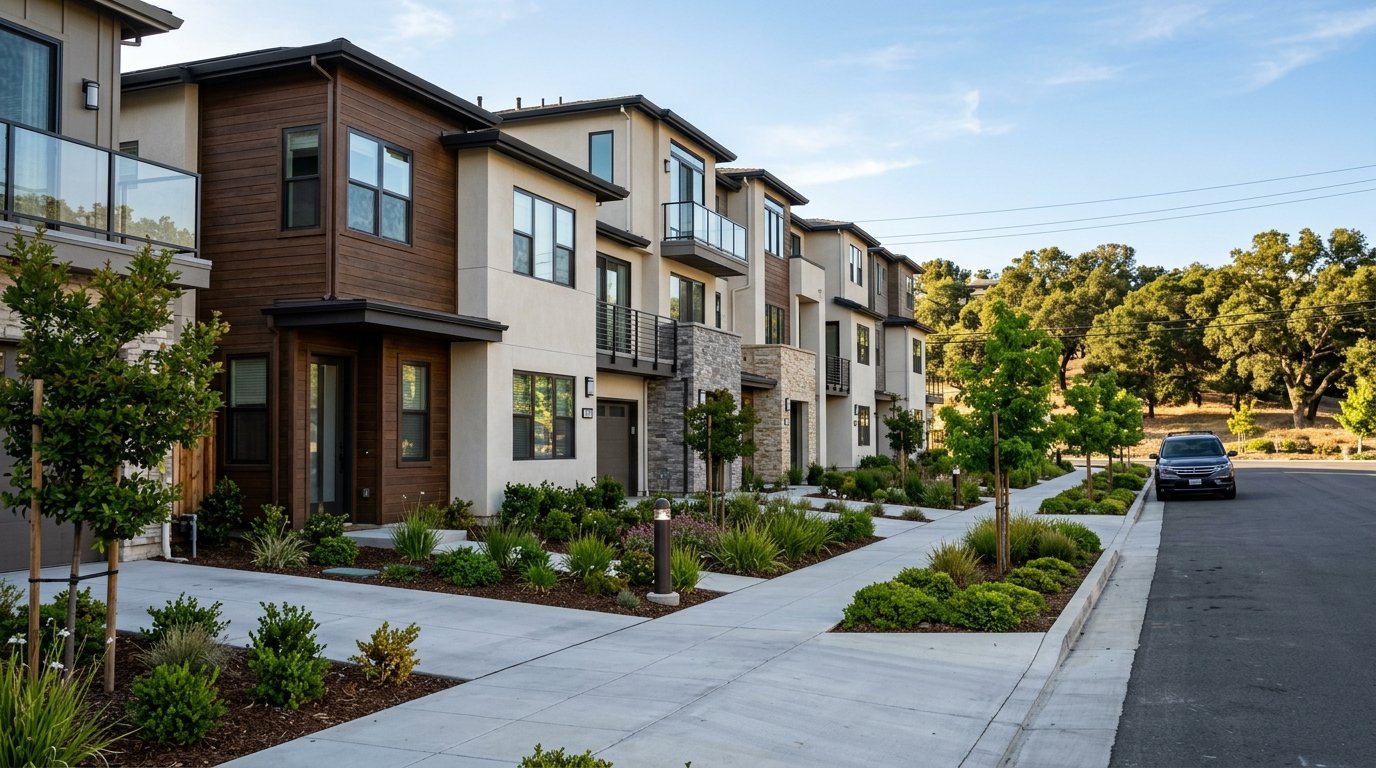
Three homes went to the October lottery, all newly built. Every one was three or four bedrooms and over 2,000 square feet.
The headline home sat in the Abigail Place development off Ygnacio Valley Road. Shea Homes built it. Two stories, four bedrooms, three and a half baths.
Open floor plan. Walk-in closet in the primary. A landscaped backyard.
The ask: $262,750.
The other two sat in the Enclave development, priced in the mid-$300,000s. They ran their own separate lottery.
| Home | Price | Appraised value |
|---|---|---|
| Abigail Place (4 bed, 2,466 sq ft) | $262,750 | $1.2M to $1.5M |
| Enclave home one | Mid-$300,000s | $1.2M to $1.5M |
| Enclave home two | Mid-$300,000s | $1.2M to $1.5M |
Each home carried an appraised value between $1.2 million and $1.5 million. The average Walnut Creek home, per Zillow, sits near $992,000.
Run the subtraction.
That’s a discount north of $700,000 on the Abigail Place house alone.
In a town where the average home nears seven figures, a gap that wide is no rounding error. It’s a different life for whoever lands it.
Who Qualifies
This is where most people learn the program isn’t for them. That’s the design. It’s built for first-time buyers who earn well below the town’s median income.
The first rule is simple.
You can’t have owned a home in the past three years. That applies to everyone on the loan, not just the primary signer.
Then come the income caps, which depend on the specific home and your household size.
| Household size | Income cap (Abigail Place) | Income cap (Enclave) |
|---|---|---|
| 3 | — | $122,200 |
| 4 | $81,400 | $135,750 |
| 5 | $87,900 | $146,650 |
| 6 | $94,425 | $157,500 |
| 7 | $100,925 | $168,350 |
| 8 | $107,450 | $179,200 |
For the Abigail Place house, a family of four tops out at $81,400 a year. The Enclave homes are looser. There, a family of four can earn up to $135,750.
Other gates apply. A minimum credit score, a minimum down payment, and a debt-to-income ratio the lender checks.
None of it is meant to be easy.
None of it’s meant to be cruel, either. The point is to land these homes with families who could never reach them otherwise.
If you live or work in Walnut Creek, the lottery puts you ahead of out-of-town applicants. That matters in a town where everyone wants in.
The Fine Print That Makes It Work
Cheap comes with strings. This isn’t a flip.
Start with the residency rule.
You have to live there full-time, at least 10 months out of the year. You can’t rent it out. You keep it in good shape.
And when you sell, you sell to a buyer the city approves.
The home has to stay below market for 45 years. That number is the whole architecture.
This isn’t a lottery for a cheap house. It’s a lottery for a permanently affordable one.
The Basics
Program: City of Walnut Creek below-market homeownership
Latest round: Three homes, lottery closed Oct. 30, 2026
Prices: $262,750 to roughly $377,000
Restriction: Must stay below market for 45 years
Who runs it: Bay Area Affordable Homeownership Alliance
How The Lottery Works
If you’re waiting for the next round, know the machine first. It’s a lottery, not a race. You don’t need to be first.
You need to be eligible and in before the window shuts. Most rounds open with a virtual workshop, which is where the process gets explained by a person instead of a PDF.
After that, you enter through the Bay Area Affordable Homeownership Alliance portal.
The income tables, the document list, and the application all live there.
Have your paperwork ready early. Proof of income, tax returns, a credit report you’ve already read yourself.
The buyers who win these lotteries tend to be the ones who were ready a week before the deadline, not the day of.
One more piece is worth knowing. The program runs through the Alliance with the Community Housing Development Corporation. Mechanics Bank adds down payment assistance and a loan subsidy for buyers who qualify.
That pairing matters more than it sounds. A below-market price is no use if the down payment is still out of reach.
The subsidy is the piece that closes the gap.
The down payment, not the list price, is what keeps most buyers out. That’s the part the subsidy targets.
Get On The List Before The Next One
Walnut Creek doesn’t do this often. In the city’s own words, below-market homes come available infrequently.
That’s the quiet tension in a town like this one.
The same city is planning its next 25 years of housing, even as three lucky families get a door opened. New housing is on the table downtown, including the eight-story project on Mt. Diablo Boulevard and the senior homes proposed at the BART station.
Three lottery homes won’t fix a housing crisis. They won’t even dent it.
But three homes is three more than zero.
For three families, that’s the whole ballgame.
The practical move now is the city’s Affordable Housing Interest List. Get on it, and you hear about the next window before it opens instead of after it closes.
Want the full picture on where Walnut Creek is building? I covered the eight-story downtown housing plan and the senior homes proposed at the BART station. Both point at the same question: who gets to stay.
The 25-year general plan update decides what comes next.
Details and income tables live on the City of Walnut Creek housing page. The Bay Area Affordable Homeownership Alliance has the rest. KTVU and The Bay Area Brief both covered the program in depth.
Know something I should cover? Reply or DM.




One comment on “Below-Market Homes in Walnut Creek: How the Lottery Works”
Comments are closed.